
Finding Joy in Sadness with Nick Strand
Resilience is the version most people see. However, there is a version of burnout that people do not always see.
It is the person who delivers the presentation, meets the deadline, takes care of everyone else, and still shows up with a smile. They may look capable on the outside, but inside, they are carrying grief, exhaustion, pressure, or a life change that has left them with very little room to breathe.
For many, this is not a rare season. It is everyday life.
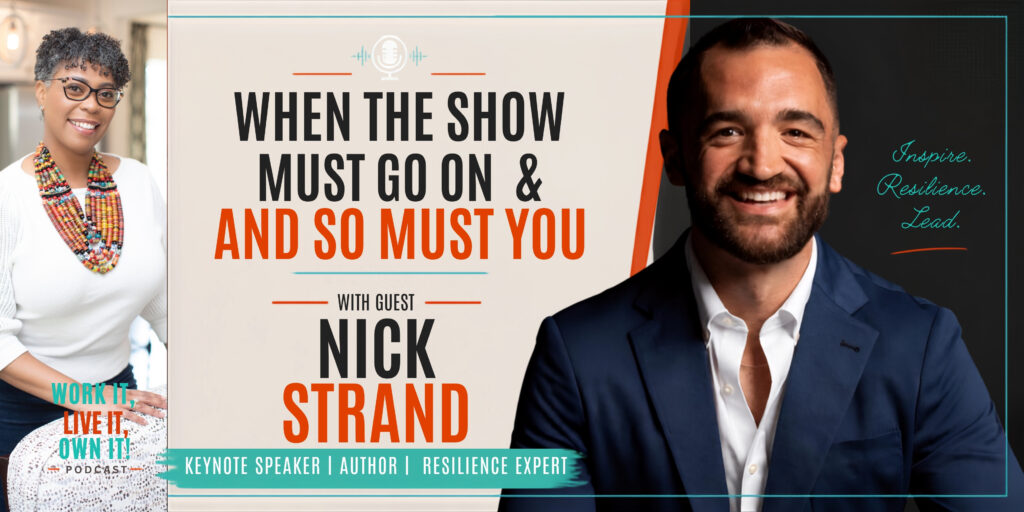
That is why my conversation with Nick Strand, keynote speaker, author, and resilience expert, matters. Nick spent two decades working in live entertainment production, helping build world class stages for artists including Beyoncé, Taylor Swift, and Stevie Wonder. His career required precision, composure, and the ability to deliver when thousands of people were watching.
Yet behind those stages, Nick was carrying a private weight. He lost his mother to cancer. He walked beside his wife, Brianna, through terminal cystic fibrosis. Later, he faced Bell’s palsy while still navigating the demands of his career. His story reminds us that professional excellence and personal pain can exist at the same time.
The question is not whether we can keep going. Many of us can. The better question is this: What does it cost us when we keep going without restoring ourselves?
Listen to our conversation
What to do When Grief Arrives
High performers are often praised for being dependable. We become the people others call when there is a problem, a deadline, or a need. We learn how to keep the wheels turning, even when our own lives feel unsteady.
Nick understands that reality in a way few people do. In a live production environment, there is no room to hope things work out. A stage must function. The timing must be right. The audience is waiting.
However, life does not always wait until the work is finished to bring us something hard.
Sometimes grief arrives in the middle of an important season. Sometimes our health begins speaking louder than our to do list. Sometimes the people we love need more from us while our professional responsibilities remain just as demanding. In those moments, the answer cannot simply be to work harder.
You can be capable and still need care. You can be committed and still need rest. You can be successful and still need support.
This is the truth that deserves more space in conversations about burnout and work-life harmony. Strength does not mean denying what hurts. It means acknowledging what is real and choosing a response that protects your well-being.
Why a Change of Scenery Is Not Always Rest
One of the most important ideas from this conversation is that stepping away is not always the same as restoring yourself.
You can go on a trip, clean the house, start a new project, fill your weekend, or scroll for hours and still return to work depleted. Sometimes we change the scenery of exhaustion without giving our minds, bodies, and emotions what they actually need.
Real rest asks a different question: What would help me return to myself?
For some, that may mean putting the phone down before bed and getting a full night of sleep. For another, it may mean telling the truth about how overwhelmed they feel. For someone else, it may mean asking for help, protecting a boundary, or making space to grieve.
Rest is not a reward that comes after you have proven you are tired enough. It is part of the foundation that allows you to think clearly, lead well, care deeply, and show up for the life you are building.
Attitude Is a Decision, Not a Feeling
Nick’s Build Your Stage framework centers on a simple but meaningful idea: Attitude plus Action equals Impact.
That is not a call to fake positivity or ignore pain. It is an invitation to decide what matters, then choose the next action that aligns with it.
An attitude decision can sound like this:
•I cannot control every outcome, but I can control my next choice.
•I can acknowledge what is hard without abandoning what matters to me.
•I can care for others without disappearing from my own life.
•I can pause before I react and choose a response that reflects my values.
This is especially important when burnout makes everything feel urgent. Urgency can make us reactive. It can convince us that every request deserves an immediate yes and every problem deserves our personal sacrifice.
Intentional leadership asks us to slow down long enough to separate what is truly important from what is simply loud.
Build a Life That Can Hold You
The lesson I keep returning to from Nick’s story is this: resilience is not about becoming harder. It is about building a life strong enough to hold you when the pressure rises.
That kind of resilience includes practical things, like rest, boundaries, support systems, and honest conversations. It also includes deeper work. It asks us to examine the beliefs that tell us we must earn rest, prove our worth through productivity, or carry every burden alone.
For those of us who are used to being the strong one, this can feel uncomfortable. You may be used to being the person who has it handled. You may have learned to keep moving because slowing down feels unsafe or selfish.
But your needs are not an inconvenience. Your well-being is not an afterthought. It is part of the strategy.
You can accomplish meaningful goals, care for your family, lead in your work, and still create a life that does not require you to abandon yourself along the way.
Your Next Right Step
If you are in a season where the show feels like it must go on, I want you to take one honest breath and ask yourself a different question.
Not, “How can I do more?”
Ask, “What do I need in order to keep showing up without losing myself?”
The answer may be small. It may be a boundary, a conversation, a pause, a medical appointment, a walk, or permission to say not today. Small choices matter because they become the structure that holds you over time.
Nick’s journey does not offer a quick fix for hard seasons. What it offers is something more valuable: a reminder that you can meet life with purpose without pretending that pain is not present.
That is what resilience looks like.
Listen to the Conversation with Nick Strand
In this episode of Work it, Live it, Own it!, Nick and I talk about high pressure performance, private pain, intentional leadership, and the kind of rest that actually restores you.
Listen to the podcast:
You can learn more about Nick, his keynote work, and the Build Your Stage framework at TheNickStrand.com.
If this message resonates with you, share it with someone who has been carrying more than people can see. Then follow Work it, Live it, Own it! for more conversations that help women move from burnout to brilliance.
References
[1] Nick Strand | Keynote Speaker, Author, and Resilience Expert
[2] Loving Someone Who Is Dying by Nick Strand
[3] Brianna Strand Patient Story | Infectious Diseases Society of America