
How to Prioritize When Everything Feels Urgent
The emails, family messages, appointments, work deadlines, and the task someone else forgot that somehow landed with you. When everything is asking for your attention, even sitting down to focus can be hard. Especially when the rest of the list keeps running in the background. If this feels familiar, you may not need to get better at carrying everything. You may need a clearer way to decide what needs your energy first.
Does everything have a deadline—or want your attention?
A notification can arrive right away without the task needing to be done that moment. Someone may sound stressed without you being the only person who can step in. And a task can matter without needing your full attention today. When you’re tracking work, appointments, family plans and other people’s needs, every open loop can start to feel like an emergency. You respond to what’s loudest or closest, then reach the end of the day feeling like you didn’t get to what mattered most. That doesn’t mean you’re bad at prioritizing. The work may be too much, the expectations unclear, or the support missing. Another list won’t necessarily solve that.
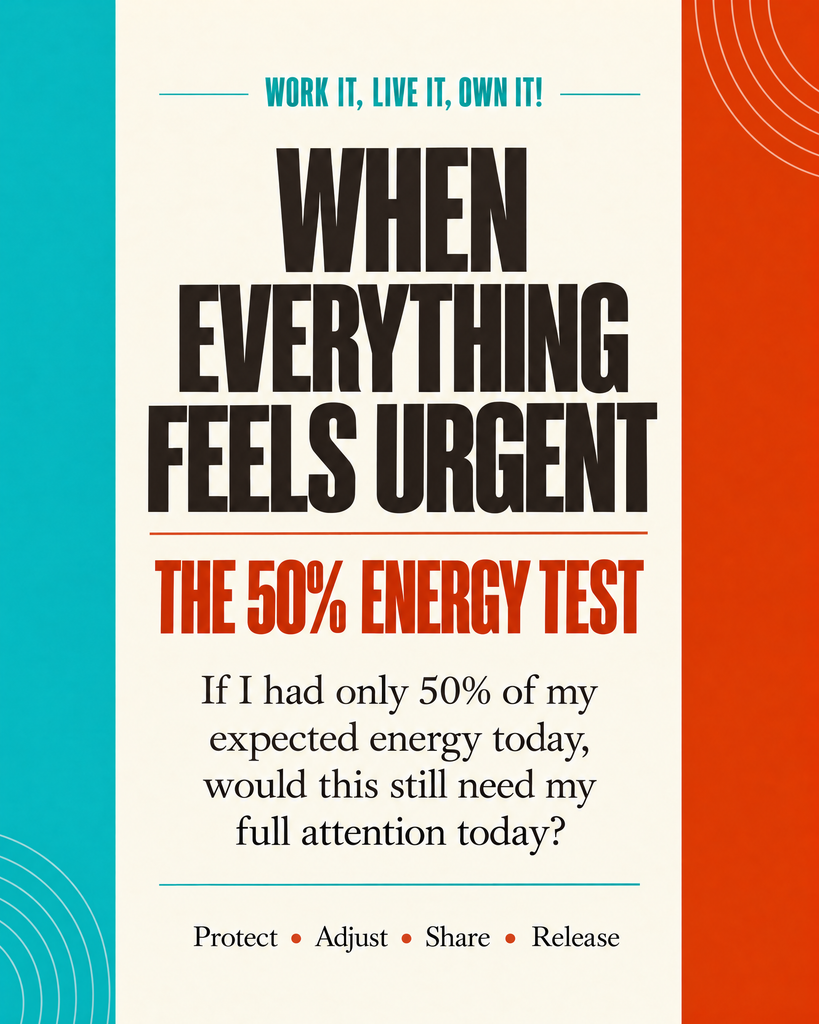
Try the 50% Energy Check-In
Choose one task that’s been taking up space in your mind. Imagine you have half the energy you expected to have today, not because you failed, but because energy changes and life happens. Ask yourself:
If I had 50% of my expected energy today, would this still need my full attention?
The question isn’t whether the task matters. Many things matter. It’s whether it needs all your attention today, given what you have to work with.
Give the task one honest category
Once you’ve picked a task, see which category fits:
- Essential: Protect the core outcome, such as a meaningful deadline or a health or safety need.
- Flexible: The timing, scope, standard or method could change.
- Shareable: The work is real, but someone else could own a part of it.
- Releasable: It may not need your energy right now; you can set it down and revisit it.
For example, a presentation may need clear recommendations without extra hours of visual polish. An appointment may need to be scheduled, but every call and follow-up may not have to be yours. This isn’t about doing careless work or letting people down. It’s about matching the task to your actual capacity, and separating the essential part from the extra layers.
When the check-in reveals a bigger problem
Sometimes the essential tasks alone exceed what you can reasonably hold. A quick check-in can’t make an unsafe workplace safe, create missing staff, or make an unfair arrangement fair, but it can help you see what’s happening more clearly. That may be information for a conversation about priorities, trade-offs, more time or added support. It isn’t proof that you should simply push harder.
One small step for today
In the next day or two, choose one task and try the 50% Energy Check-In. Give it one category: essential, flexible, shareable or releasable, and choose one matching next step. You don’t have to reorganize your whole life tonight. You don’t have to earn rest by finishing everything. One pause and one clearer decision are enough to practice.
Listen to When Everything Feels Urgent: How to Prioritize Without Carrying It All in your preferred podcast app, then use the guided practice in the PRONE to Power™ Starter Kit.
This article is for education and reflection, not a substitute for individualized medical, mental-health, legal, employment, financial, caregiving or crisis advice. Seek qualified support when appropriate.