work-life balance

  • Why Asking for Help Can Feel So Vulnerable

    Have you ever asked for help, set a boundary, or admitted that you could not do one more thing, and then immediately wished you could take it back?

    Perhaps you told your partner, “I need you to take over tonight.” Maybe you told a colleague, “That deadline is not realistic.” You might have finally shared with a friend that you have been struggling, only to wake up the next morning replaying every word.

    Did I say too much? Did I sound incapable? Should I send a follow-up message and explain myself?

    That uncomfortable morning-after feeling has a name: the vulnerability hangover.

    What is a vulnerability hangover?

    The term is often associated with researcher Brené Brown. It describes the wave of exposure, anxiety, and second-guessing that can follow an emotionally honest moment. You take a risk by letting someone see your needs or limits, and then your mind begins looking for a way back to the familiar.

    The important part is this: discomfort does not automatically mean you made the wrong decision. Sometimes it means you did something new.

    For women who have spent years being dependable, capable, and self-sufficient, asking for support can feel more threatening than continuing to carry too much. Self-reliance may have protected you in the past when it comes to success, caring for others, and life. However, a strategy that helped you survive in the past can eventually make connection feel unsafe.

    Listen to the episode

    Why the strong one wants to retreat

    When you are accustomed to being the person with the answers, vulnerability can feel like a new identity. You are no longer performing at a competent level. You are allowing other people to see the part of you that is in need, or unsure.

    That can activate a familiar internal script:

    “If I can handle it myself, I cannot be disappointed.”

    The script sounds protective, but it can leave you isolated. You may have plenty of people around you and still lack relationships where your needs have room to exist.

    Brené Brown explains in her work on vulnerability, vulnerability is not the opposite of courage; it is one of the ways courage becomes visible. Martha Beck describes the discomfort of vulnerability as connected to the possibility of being hurt. The uneasiness is real, but it is not proof that honesty was a mistake.

    A real-life example

    Imagine telling a high-stakes client that you cannot meet an unrealistic deadline. You communicate clearly and professionally. You make a reasonable request. Then, the next morning, anxiety arrives before your coffee does. You start drafting an apology. You might even consider offering to work through the weekend. The impulse is not necessarily evidence that your boundary was wrong. It may be the old survival strategy asking to take the wheel again.

    Before you undo the boundary, pause and ask: Am I responding to new information, or am I trying to escape the discomfort of being seen?

    That question creates room for discernment. It helps you separate a genuine repair from an anxiety-driven retreat.

    How to move through a vulnerability hangover

    You do not have to force yourself to feel confident immediately. Instead, try this simple process.

    1. Expect some discomfort

    If you know that asking for help may bring up discomfort afterward, the feeling will be less surprising. You can tell yourself, “This may feel uncomfortable tomorrow, but that does not mean I need to undo it.”

    2. Name what is happening

    Use plain language: “I am having a vulnerability hangover.” Naming the experience creates a little distance between the feeling and the story your mind is creating around it.

    3. Delay the retreat

    Do not send the “never mind” text while you are activated. Give yourself time before apologizing, over-explaining, volunteering to take everything back, or changing a reasonable boundary.

    4. Check the facts

    Ask what actually happened. Did the person reject you, or are you imagining that they will? Did the conversation create a problem, or did it simply feel unfamiliar? You can address real consequences without assuming that your needs are the problem.

    5. Let support be reciprocal

    Receiving support may feel uncomfortable when you are used to providing it. Still, relationships become more honest when care can move in both directions. You are not taking up too much space by allowing someone to show up for you.

    A small practice for this week

    The next time you ask for help or set a boundary, write down what you said and why you said it. The following day, when the vulnerability hangover appears, read your note before you revise your decision.

    Remind yourself

    “I can feel uncomfortable without abandoning myself.”

    You don’t have to over explain. You can be capable and still need support.

    Your vulnerability is not a leadership flaw or a relationship failure. It may simply be evidence that you are making room for a more honest, integrated life.

    Listen to the episode

    Listen to this conversation on the Work it, Live it, Own it! podcast, and remember: you do not have to return to survival mode just because courage feels unfamiliar.

    References

    [1] How to Nurse a Vulnerability Hangover, According to Brené Brown — Refinery29

    [2] Ready for a Vulnerability Hangover? Five Ideas from Brené Brown — Roman Krznaric

    [3] Vulnerability Hangovers — Martha Beck

    [4] Vulnerability Hangovers: Key Insights — Kristen Jacobsen, LCPC

    Note

    This blog offers reflection and education, not medical or mental-health treatment. If vulnerability, anxiety, or relationship concerns feel overwhelming or unsafe, consider seeking support from a qualified professional.

  • Feeling Unsupported? Everyone Relies on You, But Who Do You Rely On?

    The quiet loneliness of being the strong one

    There is a particular kind of loneliness that does not look like loneliness from the outside. Sometimes, feeling alone does not mean you lack people. It means you are surrounded by people, yet still do not feel truly supported.

    You may be surrounded by colleagues, family members, friends, clients, or community members. Your phone is always ringing. Your inbox is full. People trust your judgment, ask for your advice, and look to you when something needs to be solved. You are dependable. You are capable. You are the person others count on.

    And yet, somewhere underneath all of that usefulness, you may be wondering: Who do I get to be when I am not solving, organizing, leading, or holding everything together?

    That is the conversation behind this month’s episode of Work it, Live it, Own it!: “Everyone Relies on You, But Who Do You Rely On?”

    The episode explores the loneliness that can accompany leadership, caregiving, partnership, friendship, family responsibility, and the everyday work of being the person others count on. It is not a judgment against the people you love or work with. It is an honest look at what happens when your role becomes so closely associated with being capable that people forget you need care, too.

    When being dependable becomes an identity

    Being dependable can be a wonderful superpower. It can help you build trust, lead through uncertainty, and create stability for the people around you. The challenge begins when dependability becomes the only version of you that others get to see.

    You become the person who remembers the details, anticipates the needs, absorbs the tension, and steps in before anyone has to ask. At work, you may be the one who can be trusted with the difficult client or complicated project. At home, you may coordinate the appointments, meals, schedules, decisions, and emotional temperature of the household. In your relationships, you may listen carefully to everyone else while keeping your own concerns neatly tucked away.

    Over time, this pattern can create an uncomfortable paradox: the more useful you become, the less visible your own needs may be.

    Research on leadership offers one window into a much broader human experience. One study reported that 61 percent of chief executives experienced loneliness in their role, while other research has examined how leadership can affect loneliness differently across genders . These findings do not mean that every leader is lonely, and they do not define the experience of every caregiver, partner, friend, or family member. They do remind us, however, that responsibility and connection are not automatically the same thing. The same pattern can appear anywhere one person becomes the dependable center of everyone else’s life.

    You can have influence and still feel unsupported. You can have a full calendar and still lack a person you can call when you are the one who does not know what to do next.

    The difference between a network and a support system

    Many women have extensive networks. They know people. They collaborate, mentor, advise, encourage, and connect others. They may have hundreds of contacts and still struggle to identify one person who knows when they are having a difficult week.

    A network often knows what you do. A support system knows how you are doing.

    That distinction matters. A network may celebrate your accomplishments, but a support system also makes room for your uncertainty. A network may ask for your insight, but a support system asks what you need. A network may admire your strength, but a support system does not require you to perform strength every time you walk into the room.

    This is not about rejecting leadership, becoming less capable, or stepping away from the people you love. It is about allowing your relationships to become more reciprocal. It is about creating room for care to move in both directions.

    Why asking for support can feel so uncomfortable

    If you are accustomed to handling things yourself, asking for support may feel more vulnerable than it sounds. You may worry that you are inconveniencing someone, appearing unprepared, or changing the role people have come to expect from you.

    Sometimes the concern is not, “Will they help me?” It is, “What will they think of me now that they know I need help?”

    That question can keep you isolated even when support is available. You may minimize what you are carrying because someone else appears to have more urgent needs. You may wait until you are depleted before speaking. You may offer a long explanation because a simple request feels too exposed.

    But support does not have to begin with a dramatic disclosure. It can begin with something honest and manageable:

    “I have been carrying more than I have said. I do not need you to solve it, but I would really appreciate a few minutes to talk.”

    Or:

    “I am usually the person who has a plan, but I do not have one today. Can you sit with me while I think this through?”

    The goal is not to hand your entire life to someone else. The goal is to stop pretending that you have no life to carry.

    My moment of realizing I had built the wrong kind of community

    I share a moment from the episode that continues to stay with me. I was standing in a crowded networking room, surrounded by colleagues and acquaintances. People approached me for advice, ideas, and solutions. They told me how much they admired my drive. I smiled, listened, and responded in the way I had trained myself to respond: by being helpful.

    From the outside, I was connected. Inside, I felt completely alone.

    That moment helped me see that I had built a network of people who needed me, but I had not intentionally built a community that knew how to support me. I had become very good at being available and very unfamiliar with being held.

    That realization was not comfortable, but it was clarifying. It showed me that connection requires more than proximity. It requires honesty, reciprocity, and the willingness to let someone see more than the polished version of our lives.

    A gentle practice: the support-circle audit

    This week, consider taking a quiet look at your inner circle. You do not need a complicated system or another project to manage. Just ask yourself three questions:

    QuestionWhat it helps you notice
    Who knows when I am struggling?Whether your relationships include emotional visibility.
    Who can support me without needing me to perform or explain everything perfectly?Where safety and reciprocity already exist.
    What is one honest request I could make this week?The smallest next step toward receiving support.

    If one person comes to mind, begin there. Share one real thing—not necessarily the hardest thing. You might say, “I have been feeling stretched thin,” or “I realized I have been trying to manage this alone.” Then allow the conversation to unfold without immediately turning it back toward the other person.

    Receiving support may feel unfamiliar at first. That does not mean it is wrong. It may simply mean you are practicing a different form of strength.

    Empowerment is not isolation

    In the PRONE to Power framework, this conversation connects with Empowerment. Empowerment is not the endless extension of your capacity. It is not proving that you can carry more than everyone else. It is the freedom to make choices that honor your humanity, including the choice to ask for help before you reach a breaking point.

    You do not have to earn support by becoming indispensable. You do not have to wait until you are in crisis to deserve care. You do not have to make yourself smaller or less capable in order to let someone else contribute.

    Your goals and dreams matter. So do your relationships, your health, and your well-being. Work-life integration becomes more sustainable when responsibility is shared and connection is genuine—not when one person quietly becomes the foundation for everyone else.

    So, if everyone relies on you, take a moment to ask the question that may change the way you move through this season:

    Who do you rely on?

    You are allowed to be supported. You are allowed to be known beyond what you accomplish. And you are allowed to move from burnout to brilliance with other people beside you.

    Listen to “Everyone Relies on You, But Who Do You Rely On?” on Work it, Live it, Own it! with SaCola Lehr.

    References

    [1] Loneliness in Leadership: Why Leaders Often Feel Isolated — CMA

    [2] Gender-Contingent Effects of Leadership on Loneliness — APA PsycNet

    This article is for educational purposes and is not a substitute for mental-health or professional advice.

    SaCola Lehr

    Work it, Live it, Own it!
    From Burnout to Brilliance
    Work-life harmony strategist

  • Burnout Almost Broke Me : Here Is What Changed

    For years, I bought into a narrative that so many of us are sold: the “boss babe” hustle. I believed that success required a relentless rise-and-grind mentality. I worked my 9-to-5, ran my business late into the night, and answered emails with a knot of anxiety tight in my chest. I thought I was building an empire, but in reality, I was building a cage.

    It wasn’t until I was knocked flat by a four-month bout of walking pneumonia that I finally understood what my body had been trying to tell me. The hustle mentality is highly overrated.

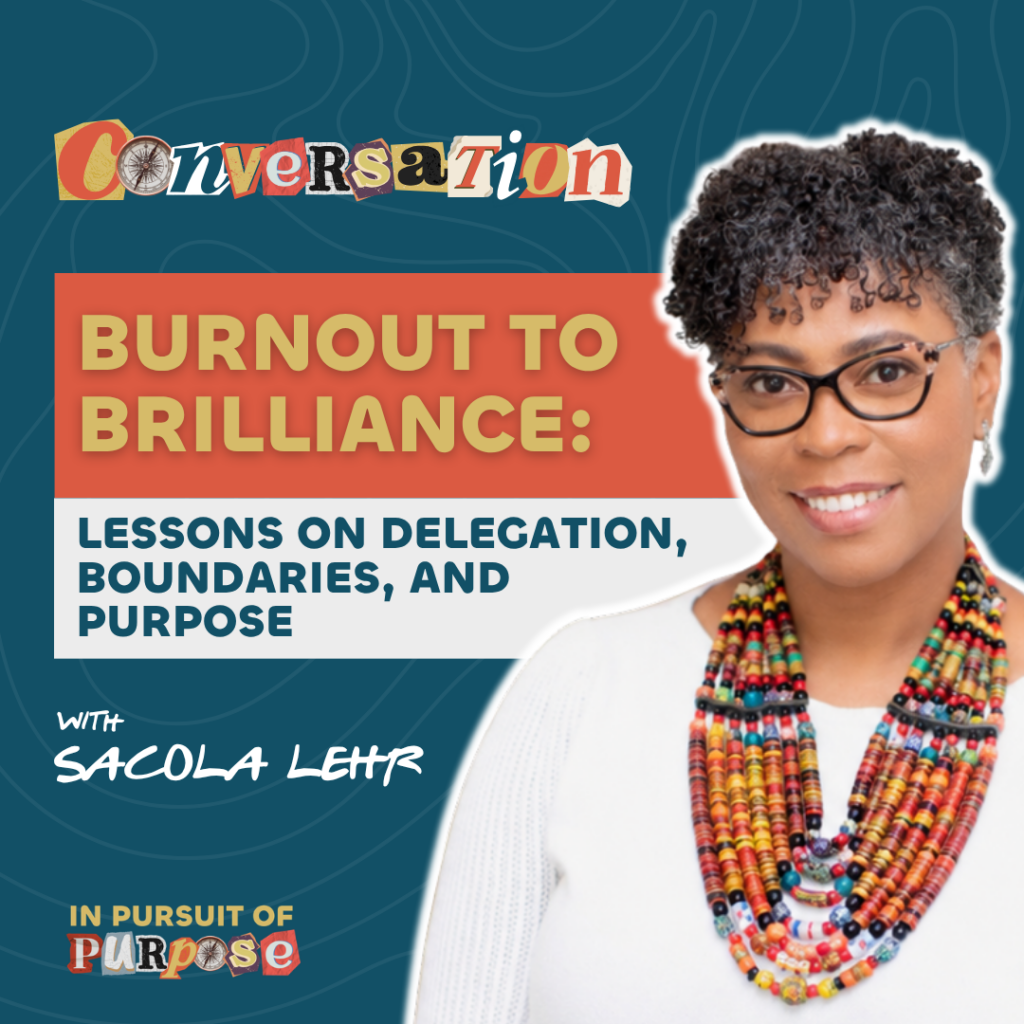
    I recently had the opportunity to sit down with Chase Friedman on the In Pursuit of Purpose podcast. We had an incredibly honest conversation about the “messy middle” of entrepreneurship, the origins of our drive, and how we can finally stop treating our fluctuating demands as personal failures.

    The Origins of the Hustle

    During the episode, Chase asked me a profound question: Where did the need to be this “boss babe” stem from?

    To answer that, I had to look back at my childhood. My early years shifted rapidly from stability to a single-parent home, to low-income housing, and eventually to homelessness. I remember the hollow feeling of opening a refrigerator and finding absolutely nothing inside.

    As a teenager, I made a vow to myself. I decided I would hustle tooth and nail to ensure my refrigerator was always full. I would never go without. That survival instinct pushed me to start working at sixteen, to grind through college, and to constantly bring my A-game.

    But survival mode is not a sustainable business strategy. When we operate out of scarcity, we take on projects that drain us and clients that do not align with our vision. We carry the burdens of our families, our colleagues, and society on our backs, secretly wondering, Who is going to show up for me?

    Redefining Success: Wellbeing is Wealth

    Society rewards output. It rewards production. We are taught that if we are not constantly producing results, we are failing. That is a lie.

    You can have a successful life and career without the crushing weight of chronic stress. You do not have to multitask to the point of dropping the ball on the things that truly matter. Real life is full of fluctuating demands there will be seasons of intense work and seasons that require deep rest. Acknowledging this rhythm is not a failure; it is the essence of true work-life harmony.

    As I told Chase on the podcast, my purpose in this season of life has shifted. Today, my wellbeing is my wealth. If I do not take care of my physical, emotional, and spiritual health, I surely cannot show up for my family, my team, or my clients.

    The PRONE to Power Framework

    This realization is what birthed my book, Harmony Hustle for Women. It is a guide written from the messy middle, designed to help you take burnout and turn it into brilliance. At its core is the PRONE framework, a compassionate approach to finding synergy in your daily life:

    •P — Prioritize: Not everything that is urgent is important. Learn to identify what truly moves the needle in your current season.

    •R — Rejuvenate: Your body will tell you when enough is enough. Listen to it. Step away, take a breath, and refill your cup.

    •O — Organize: Get your goals out of your head and onto paper. You do not have to accomplish everything at once.

    •N — Navigate Boundaries: Learn the art of delegation. Allow your team to shine in their own brilliance so you can shine in yours.

    •E — Empowered: Step into your leadership with humanity, empathy, and grace for others, and most importantly, for yourself.

    Filling Your Cup

    Author Iyanla Vanzant often talks about the concept of the cup. What is in the cup is for you; what is overflowing from the cup is for everyone else. For too long, women have been pouring from an empty cup, scraping the bottom just to give a little more to those around us.

    It is time to change the narrative. It is time to embrace a rhythm that honors our humanity.

    If you are tired of chasing someone else’s version of success, I invite you to listen to my full conversation with Chase Friedman on In Pursuit of Purpose. And if you are ready to master the art of thriving in both life and career, pick up a copy of Harmony Hustle for Women at https://sacolalehr.com/harmony-hustle-for-women/

    Let’s throw out the boss babe manual and start building lives of true purpose, prosperity, and peace of mind.

    SaCola Lehr is the author of Harmony Hustle for Women: Master the Art of Thriving in Life and Career and host of the Work It, Live It, Own It podcast.

  • How to Rest Without Feeling Guilty: 3 Proven Steps to Reclaim Your Peace

    Here is a truth that might make you uncomfortable: rest is not a reward for exhaustion. It is a requirement for brilliance. If you are treating rest like another metric to conquer, or a luxury you have to earn by completely emptying your tank first, you are not resting. You are just recovering from burnout. To move from burnout to brilliance, you must learn how to rest without feeling guilty.

    For women who are used to driving results, managing households, and leading teams, the concept of doing nothing feels entirely foreign. We have been conditioned to believe that every minute must be productive. So, when we finally do take a break, we turn rest into a project. We read self-improvement books on the beach. We listen to industry podcasts while we run. We use our weekends to meal prep, organize the garage, and catch up on emails. We are “resting” our bodies, but our minds are still running a marathon.

    The problem is that this kind of optimized downtime does not restore us; it just changes the scenery of our exhaustion.

    Listen to the full episode of Work it, Live it, Own it! here

    The Trap of Optimized Downtime: Why You Can’t Rest Without Feeling Guilty

    Why do we do this? Because stillness feels dangerous when your entire identity is built on being capable and productive. If you stop moving, you might have to sit with the exhaustion you have been outrunning. Society tells us that our value is tied to our output. So, we feel guilty when we are not producing. We believe that if we are not constantly moving forward, we are falling behind. This mindset turns rest into a source of anxiety rather than a source of renewal, making it nearly impossible to rest without feeling guilty.

    I know this cycle intimately. I remember taking my first real beach vacation in years. I was supposed to be unplugging. But instead of listening to the ocean, I spent the first three days sitting under an umbrella with a notebook, furiously outlining my goals for the next quarter. I was so terrified of losing momentum that I could not even let myself enjoy the sand. I was physically on vacation, but mentally, I was still in the office.

    It was not until I realized that my inability to rest was actually sabotaging my brilliance that I knew something had to change.

    Navigating Your Boundaries Around Rest

    This brings us to the “N” in the PRONE to Power framework: Navigating Boundaries.

    Navigating boundaries is not just about saying no to other people; it is about saying no to the voice in your own head that tells you to keep working when you are supposed to be resting. It is about creating a boundary around your downtime and fiercely protecting it from the infiltration of productivity.

    If you are reading this and realizing you have not actually rested in years, that you have just been recovering from exhaustion so you can go back to producing, I want you to know: that realization is heavy. You are not broken for not knowing how to stop. You were trained to be this way by a world that profits from your endless output.

    But you are allowed to stop producing. You are allowed to have time that belongs to absolutely no one, not even your own self-improvement goals.

    Your Action Step: Learning How to Rest Without Feeling Guilty

    This week, I want you to give yourself fifteen minutes of completely unproductive time. No podcasts. No planning. No organizing. Just sit. Stare out a window. Drink your coffee without scrolling. When the urge to “do something useful” hits you, just notice it, and stay seated. Just fifteen minutes. This small window is your first step in practicing how to rest without feeling guilty.

    Remember, you can accomplish your goals and dreams without forsaking your family, your health, and your well-being. True brilliance requires genuine rest. It is time to move from burnout to brilliance.

    Listen to the full episode of Work it, Live it, Own it! here

    Ready to dive deeper? Grab your copy of Harmony Hustle for Women: Master the Art of Thriving in Life and Career on Amazon: Purchase Here

  • Free Yourself: How to Conquer the Overdelivering Trap & Find Your Flow

    I’ve learned that life isn’t about the impossible goal of perfectly balancing time between work and home. It’s about creating a beautiful, life-giving rhythm that works for you, one that adapts to what life asks of you without leaving you feeling utterly exhausted and scattered.

    But what happens when that rhythm feels less like a gentle flow and more like a devastating flood? What happens when your incredible dedication at work starts to drain the very life you’re working so hard to build? You may find yourself caught in what I call the “overdelivering trap.” It’s that heartbreaking place where your 200% effort has slowly, insidiously become the new 100% expectation, and you’re left wondering where your precious energy has vanished.

    This post is here to help you shape a flow that blends your work and your personal time in a way that truly supports and uplifts you. Because work-life harmony isn’t about rigid, unforgiving lines; it’s about a beautiful synergy. And the first, most courageous step is understanding how we get so trapped in the first place.

    How We Tragically Lose Our Rhythm

    It rarely happens all at once. Instead, it’s a slow, dangerous creep series of small, well-intentioned “yeses” that eventually lead to an overwhelming and unsustainable workload. For example, a wonderfully high-achieving woman I know (Let’s call her Keisha). Her days were once filled with the thrill of leading workshops and mentoring professionals. Suddenly, life took a sharp, unexpected turn, and she became her mother’s primary caregiver. Yet, her immediate, powerful impulse was to keep performing at that same superhuman level at work, to prove to herself and everyone else that she could handle it all.

    Like so many of us, Keisha’s identity was deeply and powerfully connected to her accomplishments. This High-Achiever Syndrome makes the idea of delivering anything less than our absolute best feel like a shocking personal failure. On top of that, many of us have a deep, innate desire to be helpful, which can easily and tragically slide into People-Pleasing. We say “yes” to things we simply don’t have the bandwidth for, because the immediate discomfort of saying “no” feels far worse than the crushing exhaustion of doing the work.

    Eventually, our Work Becomes Our Identity. When your job is who you are, any setback feels like a fundamental, devastating flaw, which makes the thought of pulling back absolutely terrifying. When you combine these powerful traits with a workplace that is happy to take as much as you’re willing to give, you have the perfect, heartbreaking recipe for losing your flow.

    The Devastating Cost of an Unsustainable Rhythm

    The most immediate cost is a profound burnout and a deep, corrosive resentment. However, the true cost is the devastating, invisible toll it takes on your life. It’s the hobbies you once loved that now gather dust, the cherished friendships you’re too tired to nurture, and the precious weekends spent recovering instead of truly living.

    One woman I spoke to during my research shared something that absolutely broke my heart. She said, “I cannot stress how good it feels to have a clean house. I used to feel like a horrible adult because I couldn’t keep my house clean. I didn’t realize at the time: I just didn’t have the energy.”

    That’s what’s truly at stake. It’s not about being tired; it’s about your beautiful, vibrant life shrinking until it’s nothing but work and recovery. But I promise you, you can find your rhythm again. It starts with a few intentional, courageous shifts.

    3 Liberating Ways to Find Your Flow Again

    Ready to shape a flow that truly supports you? Here are three empowering ways to begin.

    1. Start with a Small, Courageous Experiment: This first step can feel a little scary, but it’s about bravely recalibrating what “a good job” means. For one week, I invite you to consciously choose a task and deliver it at 80% of your usual effort. You’ll likely be shocked to discover that your 80% is what most people consider 100%. This isn’t about doing a bad job; it’s about gathering powerful data and proving to yourself that you can pull back without everything falling apart.

    2. Introduce a Powerful, Thoughtful Pause: Once you’ve seen that it’s safe to pull back, you can then introduce a thoughtful pause when new requests come your way. Instead of an immediate, automatic “yes,” try saying: “I’m happy to help with that. To make sure I give it the right attention, which of my current projects should I de-prioritize to make room for this?” This simple, powerful shift frames your time as a precious, finite resource and positions you as a strategic partner, not just a pair of hands.

    3. Passionately Nurture Your Life Outside of Work: Finally, this is the deepest and most transformative work. You have to start untangling your self-worth from your job performance. You can do this by intentionally creating a life outside of work that is so compelling and joyful, it starts to compete for your attention and energy. Schedule things that truly matter to you, a walk with a cherished friend, a creative pottery class, and treat them with the same non-negotiable importance as a meeting with your CEO.

    Own Your Rhythm, Own Your Life

    Finding your flow isn’t about doing less; it’s about doing what truly matters, in a way that sustains and uplifts you. It’s about triumphantly remembering that you are more than your productivity. Some days, your career may need more of you. On other days, your family or your own precious well-being might take center stage. And that’s not a failure it’s a beautiful, real life.

    If this topic hits home, don’t just stop here. I created a free PRONE to Power Worksheet that will help you put these strategies into action. You can grab it now at https://bit.ly/PRONEtoPowerwksht

  • The Silent Burnout Trap: Why Your Need to Be “Always On” is Hurting Your Work-Life Harmony

    It’s Time to Power Down

    We live in the age of the perpetual ping.

    From the moment we wake up, our devices are screaming for our attention: Slack pings, email notifications, group texts, and the endless scroll of social media. We’ve been conditioned to believe that constant responsiveness is a sign of dedication, professionalism, and even love. If you’re not answering that email at 10 PM, are you truly committed? If you don’t reply to that text instantly, do you even care?

    This pressure to be persistently available is more than just a modern inconvenience; it’s a deeply damaging habit that is quietly draining your emotional battery. In this powerful installment of the “Suck It Up, Go It Alone” series, we’re unpacking why this need to be “always on” is not serving you, and how you can take brave action to reclaim your peace.

    The Cause of Your Hyper-Responsiveness

    The truth is, this isn’t just about technology. For many of us, the need to be constantly available is deeply rooted in our past.

    Think back. Were you the child who smoothed over tension, anticipated everyone’s needs, or felt responsible for keeping the peace? For those who grew up feeling they had to earn love or prove their value through their helpfulness, being needed became an identity.

    This is the Identity Trap: the dangerous, subconscious belief that says, “If I’m not available, I’m not valuable.”

    Let me be clear: Your worth is not tied to how quickly you respond or how many fires you put out. That survival strategy may have served you well as a child, but as an adult, it is an emotional drain that is leading you straight to exhaustion. You are valuable, period. Your availability is a choice, not a measure of your worth.

    Burnout Disguised as Dedication

    When you are constantly responding, checking, and anticipating, your nervous system is trapped in a perpetual state of “alert mode.” It never gets a break.

    This hyper-vigilance is the unseen cost of constant availability. It chips away at your peace of mind, manifesting as:

    • Irritability and Fatigue: You’re too wired to rest, and too tired to be present.
    • Resentment: You start to resent the very people you’re trying to care for and serve.
    • Emotional Exhaustion: You are the emotional glue for everyone your spouse, your kids, your parents, your team and the weight is crushing.

    We often label this constant state of “on” as dedication, but I want you to recognize it for what it truly is: burnout disguised as dedication. For some, this is even a trauma response, a hyper-awareness carried into adulthood from homes where peace was conditional on behavior.

    It’s time to stop being addicted to the chaos and start prioritizing your well-being.

    Let’s Reclaim Your Energy and Peace

    The good news is that you can unlearn this habit. You can reclaim your time, your energy, and your peace without losing your impact. It takes brave action, but the reward is a life lived in harmony, not survival mode.

    Here are four practical strategies you can implement today:

    ActionStrategyThe “Why”
    1. Set a Tech BoundaryTurn off all notifications outside of work hours. Create “no phone zones” during dinner, family time, or personal rest.To give your brain and nervous system a much-needed break from constant pings and demands.
    2. Communicate Your AvailabilityClearly state your response times. Example: “I check emails three times a day,” or “My cut-off time is 6:30 p.m. for family time.”People will respect your boundaries when they are clearly communicated and consistently enforced.
    3. Create Micro-Breaks to ResetImplement 5-minute deep breathing or stretching breaks, or a 30-minute “just sit, just be” ritual after work.These small, intentional pauses calm your nervous system and restore focus, preventing the buildup of stress.
    4. Remind Yourself of the TruthInternalize the truth: You are allowed to rest, and you are allowed to be unavailable.The world will keep spinning. Your value is inherent, not conditional on your responsiveness.

    People who love and respect you will understand your need for boundaries. When you clearly communicate your availability, you teach others how to treat you, and you give yourself permission to power down.

    The Takeaway: Persistent availability is a silent burnout trap. By taking these brave actions, you can stop trading survival mode for strategies that help you truly thrive in your career, life, and everything in between. You are allowed to rest. You are allowed to be unavailable. And the world will keep spinning.

    Listen to the full episode of Work It, Live It, Own It for a deeper dive into this topic

  • Fear of Confrontation: The Silent Drain on Women

    Fear of confrontation is draining women in the sandwich generation. Learn how silence fuels burnout and discover practical steps to set boundaries, stop people-pleasing, and protect your well-being.

    So many women in the sandwich generation — balancing careers, raising kids, and caring for aging parents — have learned the same survival strategy: just suck it up.

    When your boss piles on another project, you say yes. When your family needs more of you, you stretch yourself thinner. You stay silent because speaking up feels risky. That silence gives a temporary sense of peace, but in reality? It creates what I call the pressure cooker effect.

    Like steam building with no release valve, unspoken frustration, resentment, and stress pile up inside of you. At first, you manage. But over time, the pressure starts to leak out — through exhaustion, disengagement at work, or snapping at the people you love most.

    This is what fear of confrontation costs us:

    • Energy — you’re drained from carrying unspoken tension.
    • Relationships — silence builds walls instead of connection.
    • Health — stress that simmers eventually takes a physical toll.

    The good news? You don’t have to overhaul your whole life to start changing this.

    Here’s a simple reset you can try this week:

    1. Write one boundary you’ve been afraid to set — at work or at home.
    2. Draft a kind but clear script. For example: “I’d love to help, but I’m fully booked this week. Can we revisit this next month?”
    3. Practice it, even if you don’t deliver it yet. Speaking the words out loud starts to release the pressure and rewires your confidence.

    Silence may feel safe, but it’s not sustainable. Real strength comes when you stop “sucking it up” and start showing up honestly — for yourself and those you love.

    Want help putting this into practice? Download my free PRONE to Power Worksheet.

  • Why Suffering in Silence is Holding You Back

    So many women in the sandwich generation — balancing careers, caregiving for aging parents, and raising kids — have been conditioned to “suck it up.” We tell ourselves it’s just what strong women do: hold it all together, sacrifice our own needs, and push forward without complaint. But here’s the hard truth: that mindset is not strength; it’s survival mode. And over time, it erodes our health, our relationships, and our sense of self.

    In his book Triage Your School, Dr. Christopher Jenson highlights three main areas where stress silently takes its toll: physical health, emotional well-being, and relational health. Those areas don’t just apply to schools — they apply to every woman trying to hold too much together. Ignoring them leads to resentment, disconnection, and full-blown burnout.

    Let’s break that down:

    Physical health – Stress shows up as fatigue, headaches, or even chronic conditions. When you keep pushing through, your body eventually forces you to pay attention.

    Emotional well-being – “Sucking it up” often means stuffing down feelings. That emotional silence turns into irritability, anxiety, or numbness.

    Relational health – When you never speak your needs, the people around you can’t support you. Distance grows, and loneliness sets in.

    These costs are hidden at first, but they’re very real. And they’re the reason why silence and self-sacrifice can’t be the badge of honor we wear anymore.

    A Practical Reset

    Here are two small but powerful steps you can take this week to break the silence:

    1. Journal one area where you’ve been “sucking it up.” Maybe it’s taking on extra work at the office, caring for a parent without asking siblings for help, or agreeing to commitments you don’t have the bandwidth for. Write it down — naming it is the first step to changing it.
    2. Say it out loud to someone you trust. Share your journal entry with a friend, spouse, or mentor. Speaking the words creates connection and signals to your brain that you don’t have to carry it all alone.

    It’s not about dumping every burden at once. It’s about creating tiny cracks in the silence so your truth — and your needs — have room to breathe.

    The Bottom Line

    Dr. Jenson’s framework reminds us that no system—schools, families, or our own lives—can thrive without good staffing, communication, and resources. The more you suffer in silence, the weaker those areas become. Real strength isn’t in silence or self-sacrifice; it’s in asking for help, setting boundaries, and making sure your resources are protected so you can thrive.